
Client: City of Newcastle (Council) | Project: Throsby Creek Footbridge | Location: Newcastle
Case Study
In a world-first for corrosion mitigation, the City of Newcastle (NSW Central Coast) successfully used an electrochemical treatment process to protect the steel reinforcement inside concrete bridge pylons from saltwater damage. This innovative technique was applied to the Throsby Creek Footbridge project.
Marine & Civil were selected as the project contractor and they identified Kennards Hire as an appropriate supplier of the critical power source for the 24/7 electrical process. Council agreed and Joshua Broekman, Kennards Hire’s Operations Production Specialist for Power Distribution & Renewables, started work on developing a solution.
A specific power requirement
“The project needed to provide a suitable power supply, have environmental credentials and achieve the targets that Council had set for the project” Joshua said. Marine & Civil’s four-month process needed an uninterrupted, low-load power supply from a generator placed about 20 metres away from the bridge. Joshua adds, “The generator was positioned in the Islington public park, so reducing generator noise, fumes and after-hours disturbance was very important.” Traditional diesel running 24/7 would mean nighttime noise and constant refuelling.
Our solution with sustainability
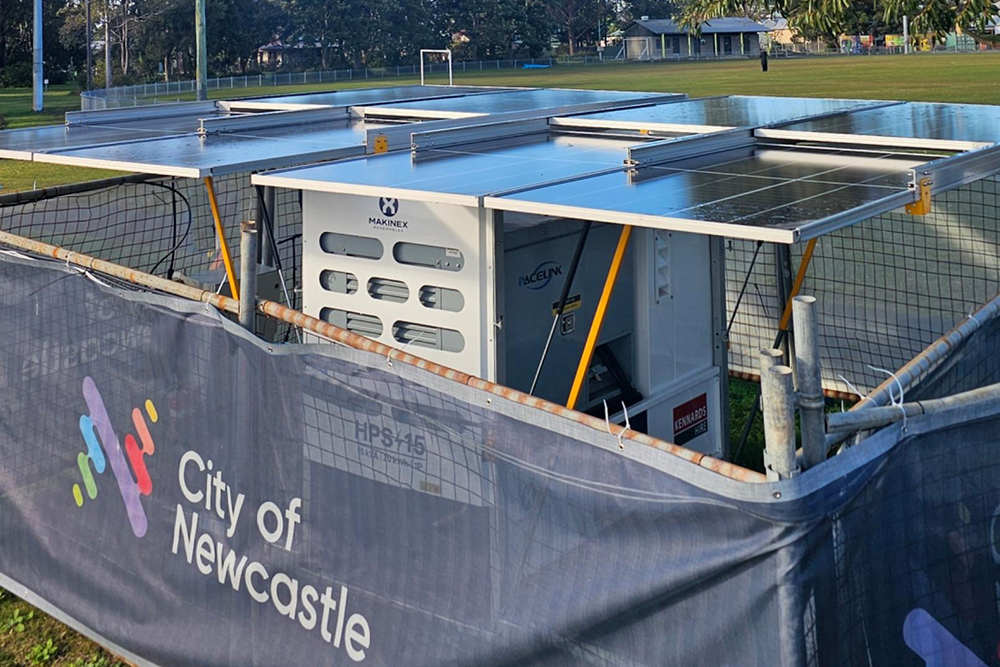
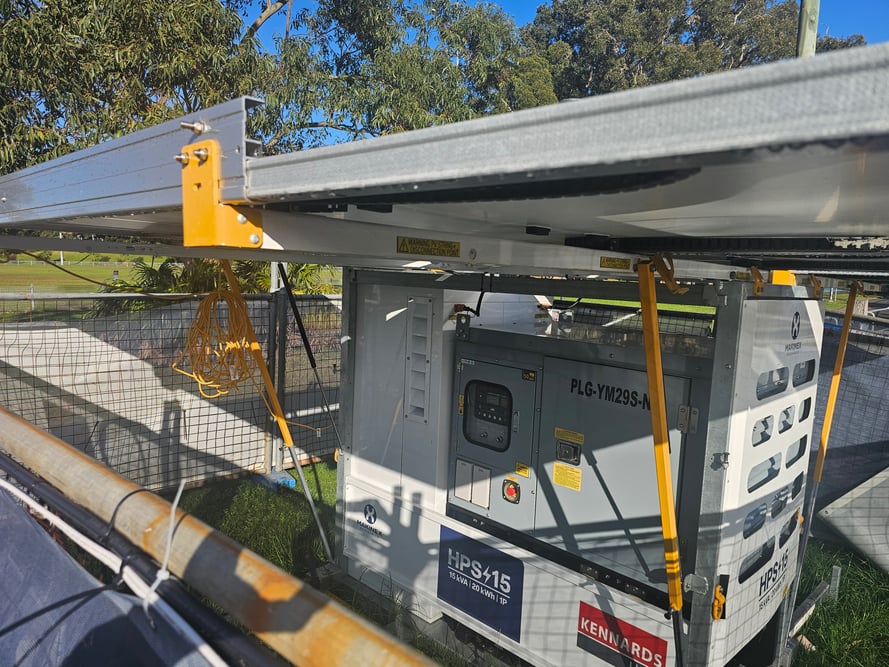
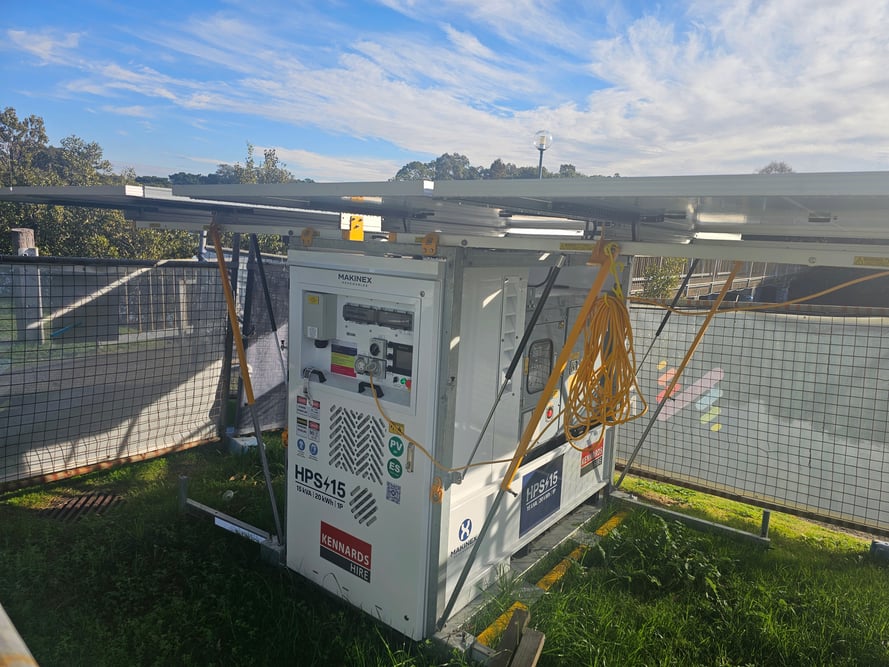
We proposed a hybrid battery generator with solar and an automated diesel back-up. The 15 kVA unit was paired with panels producing up to 4 kW of solar and on-board battery storage delivering silent, battery-led power day and night. If the battery dipped on particularly overcast days, the diesel engine auto started to top up, then shut down again. Joshua explained, “We managed the unit remotely with periodic site checks and provided Council and Marine & Civil weekly updates on performance.” The remote management also enabled the team to set quiet hours, ensuring the engine would not start during the night but still protect the electrochemical treatment from power loss. “A hybrid set-up matched the electrical profile perfectly with steady output at low load, minimal operator touches and no site traffic for refuelling,” says Joshua.
Delivering the project’s key outcomes
- Tailored configuration– We sized the inverter and battery to the electrochemical treatment load, with the engine set as a true back-up rather than the primary source.
- Deployed Safety – We deployed the unit off the path and away from water, with solar panels integrated and fenced.
- Monitoring and reporting– We provided updates on run hours and a project Environmental Scorecard that captured solar kWh generated, diesel saved, equivalent CO₂ avoided and total operating hours.
Project results
- 11 hours run time of the diesel generator across four months. The engine was seldom used and could have continued for another 3 years at the same rate without refuelling.
- 5,304 litres of diesel saved and 14.3 tonnes of CO₂ avoided.
- Zero refuelling visits. No diesel deliveries were required on site.
Surpassing Expectations
Joshua says, “The City of Newcastle and Marine & Civil were surprised by how little the diesel back up ran and valued the performance reporting and scheduled quiet hours.” The project went on to win a Highly Commended 2025 Procurement Project of the Year Award for its innovative process and sustainable approach.
Case Study